Stop Permitting Against a Ghost: Why Moss Landing Shouldn’t Define Your BESS Review
The 2025 fire at the Moss Landing Power Plant in Monterey County, California, reflects storage risk from half a decade ago. Modern battery projects are built on different chemistry, different codes and different siting standards — and communities should review them that way.
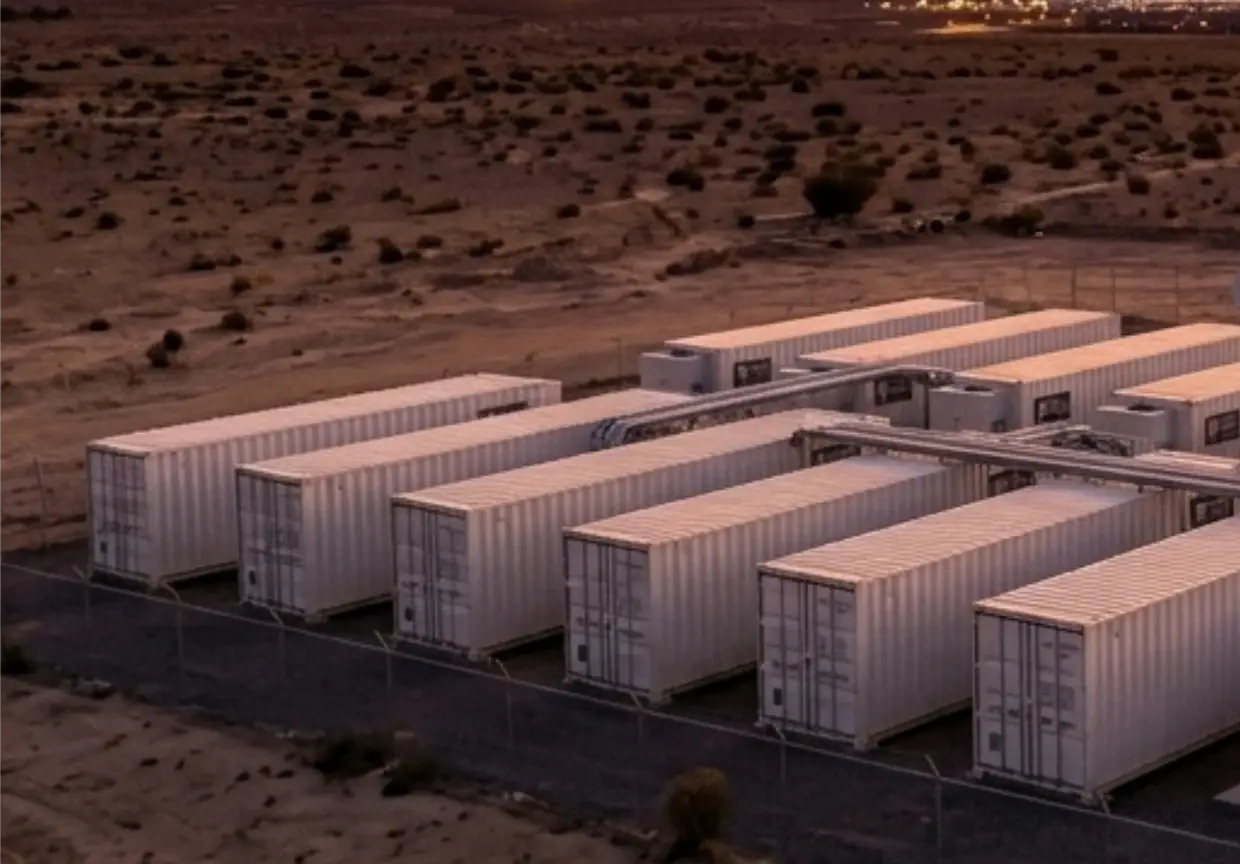
In January 2025, a fire destroyed most of the 300 MW (1,200 MWh) Moss Landing facility on the Monterey County coast and forced roughly 1,200 nearby residents to evacuate their homes. That image now shadows nearly every battery storage conversation. But Moss Landing is the wrong benchmark for most battery storage projects. It reflects storage risk from half a decade ago — a utility-scale plant with a fire profile fundamentally different from the smaller systems communities are evaluating today.
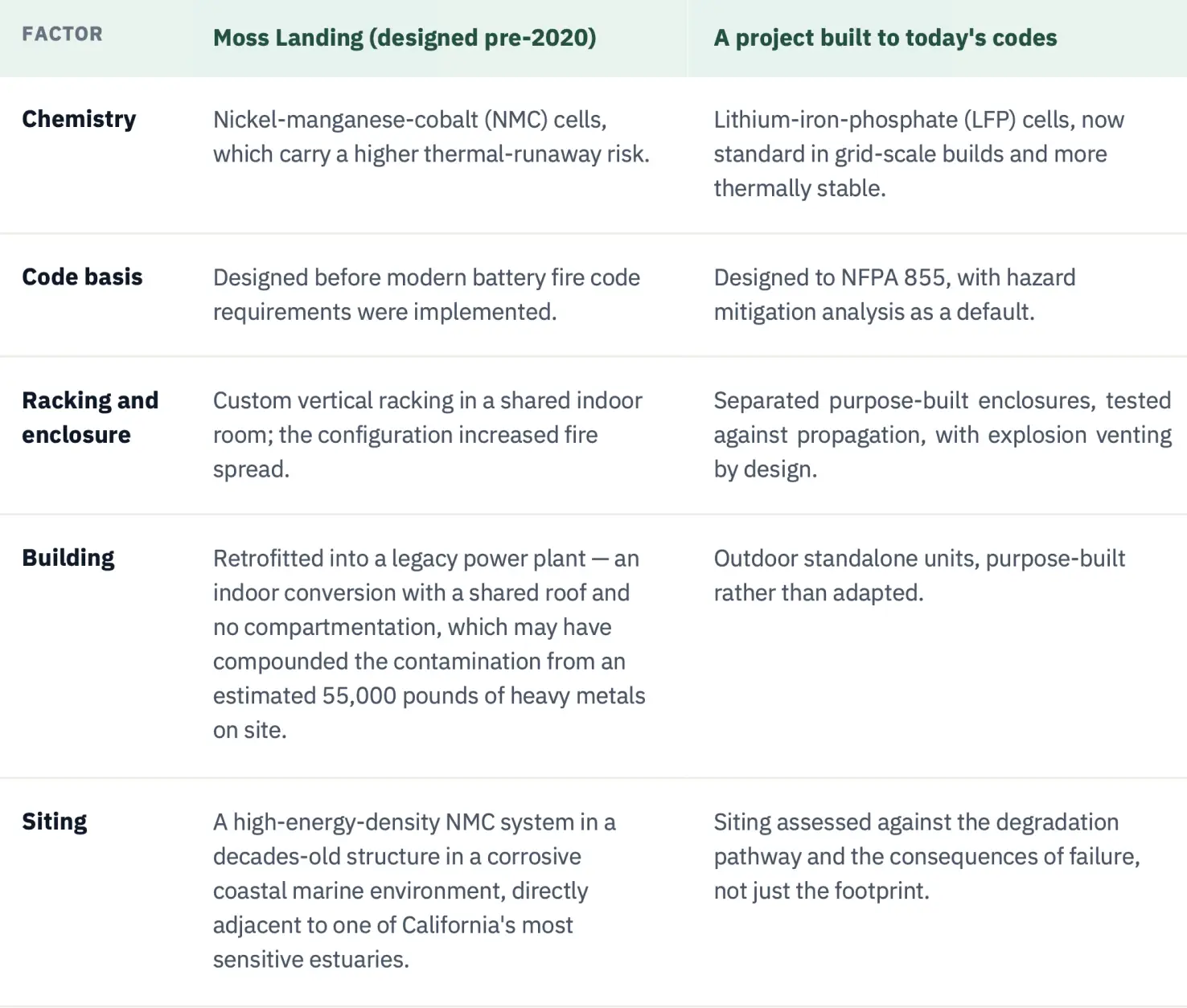
Five things made Moss Landing catastrophic — today’s developers won’t, and can’t, make the same mistakes
For reasons of both safety and good old-fashioned economics, developers, manufacturers and regulators have combined to engineer these problems out of modern projects:
The incidents cited at public hearings are a catalog of solved problems
Moss Landing is not the only case being cited. The 2019 McMicken fire in Surprise, Arizona involved first-generation NMC cells installed before the first battery storage fire code was even published. These names still surface at nearly every public hearing, pushing for battery storage bans and moratoria. But they are not a random sample of what battery storage does — they are a catalog of problems the industry has since named, researched, and engineered against.
These incidents are not a random sample of what battery storage does. They are a catalog of problems the industry has since named, researched, and engineered against.
Warwick is the more relevant comparison
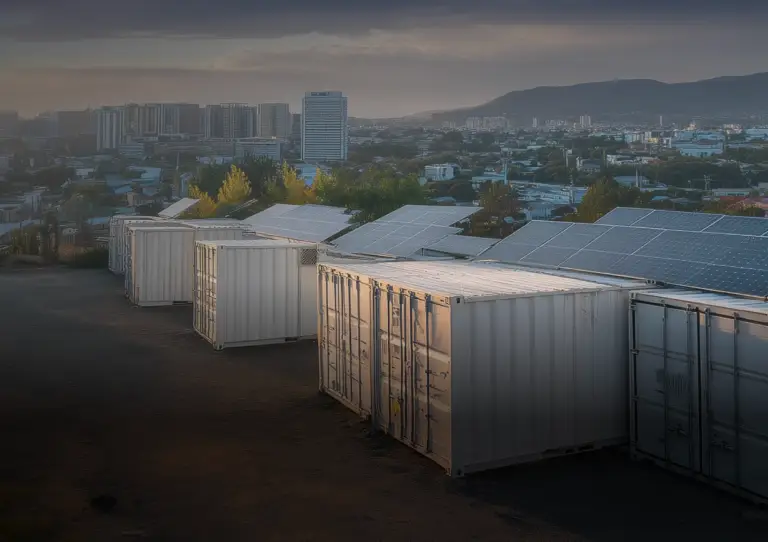
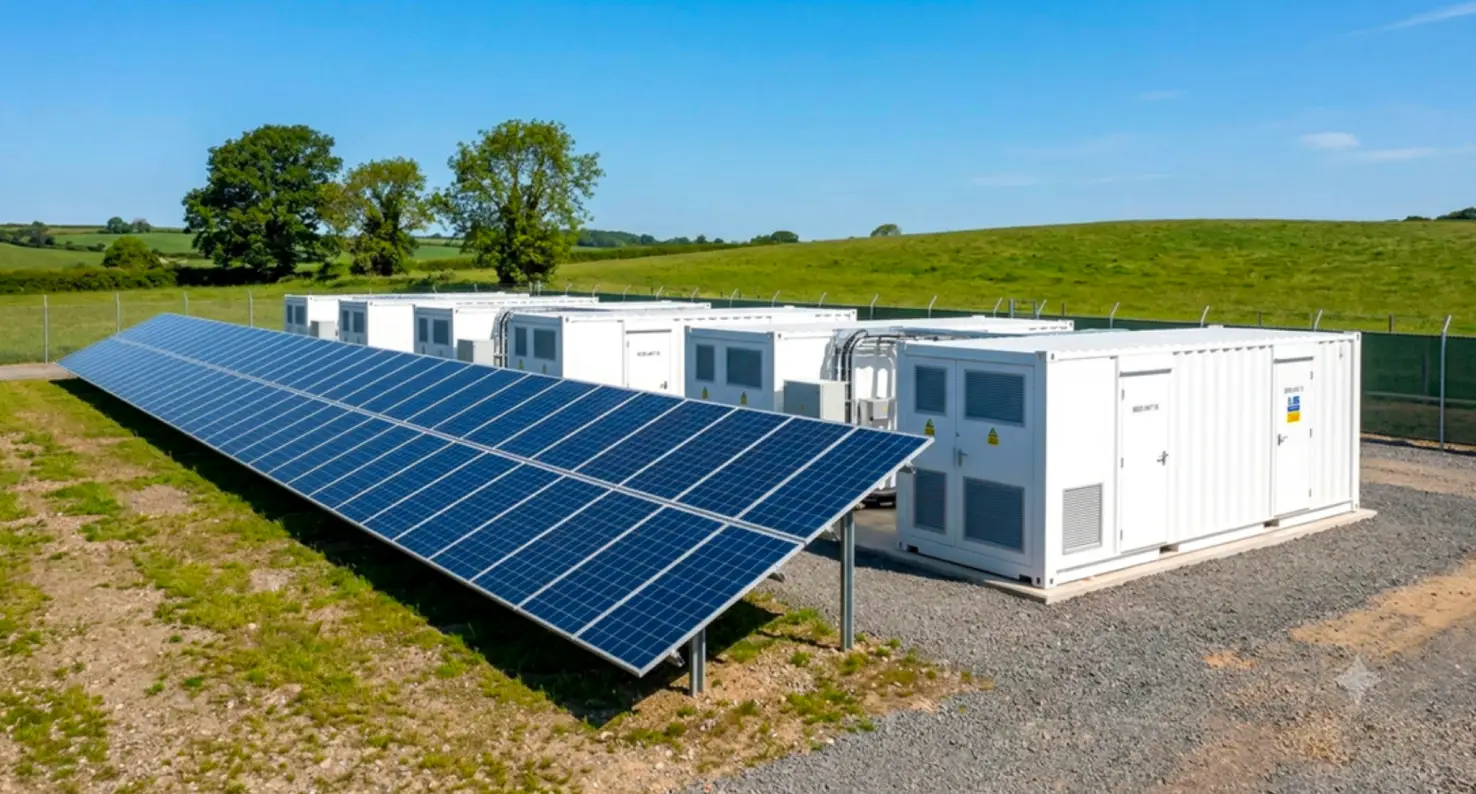
A more useful comparison for community-scale projects is the December 2025 fire at a 4 MW (17.9MWh) facility in Warwick, New York, which investigators traced to a likely manufacturing defect in the battery equipment. Warwick matters less as a verdict on any single project and more for its scale and the lessons it offers: it is far closer in size to the systems most communities are actually reviewing than to a utility-scale plant like Moss Landing.The incident is a reminder that the regulatory and code structure around a project — independent review, siting standards and emergency-response planning — is what shapes how a failure unfolds and how far its consequences reach. That is what a modern storage safety review should be examining.
Modern fire codes are advancing fast
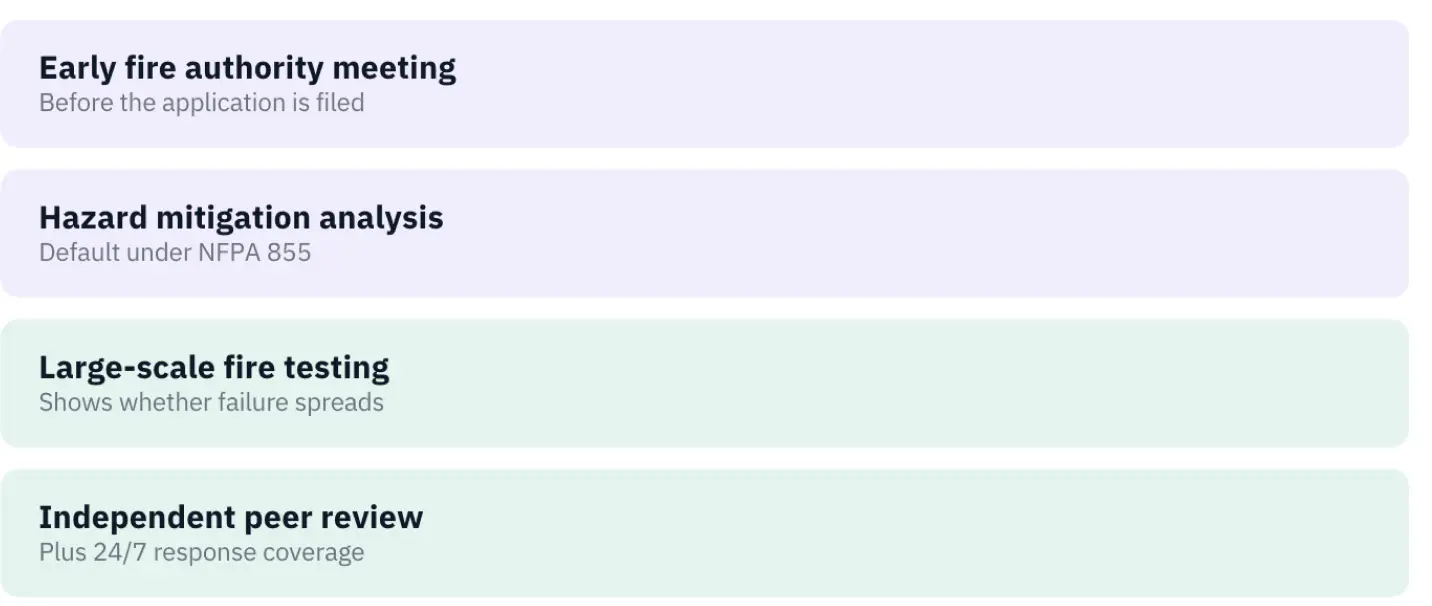
NFPA 855 is the National Fire Protection Association standard for the installation of stationary battery energy storage systems. Its 2026 edition now makes a hazard mitigation analysis (HMA) a default for battery storage installations and tightens explosion-control requirements, while UL9540A large-scale fire testing demonstrates whether a failure will propagate before a project is ever energized.
Some states are moving fast too. New York’s 11 Fire Code Recommendations now require independent peer review, fire mitigation personnel reachable 24/7, and on-site response within four hours. The New York State Interagency Fire Safety Working Group’s July 2024 recommendations underscore that safety compliance requires meaningful investment — roughly $57,000 in annual operational costs and $60,000–$111,000 in capital expense per project. California followed suit with the Clean Energy Safety Act (SB 283), which requires developers to meet with local fire authorities before they even submit an application.
The data: dramatically safer per unit installed
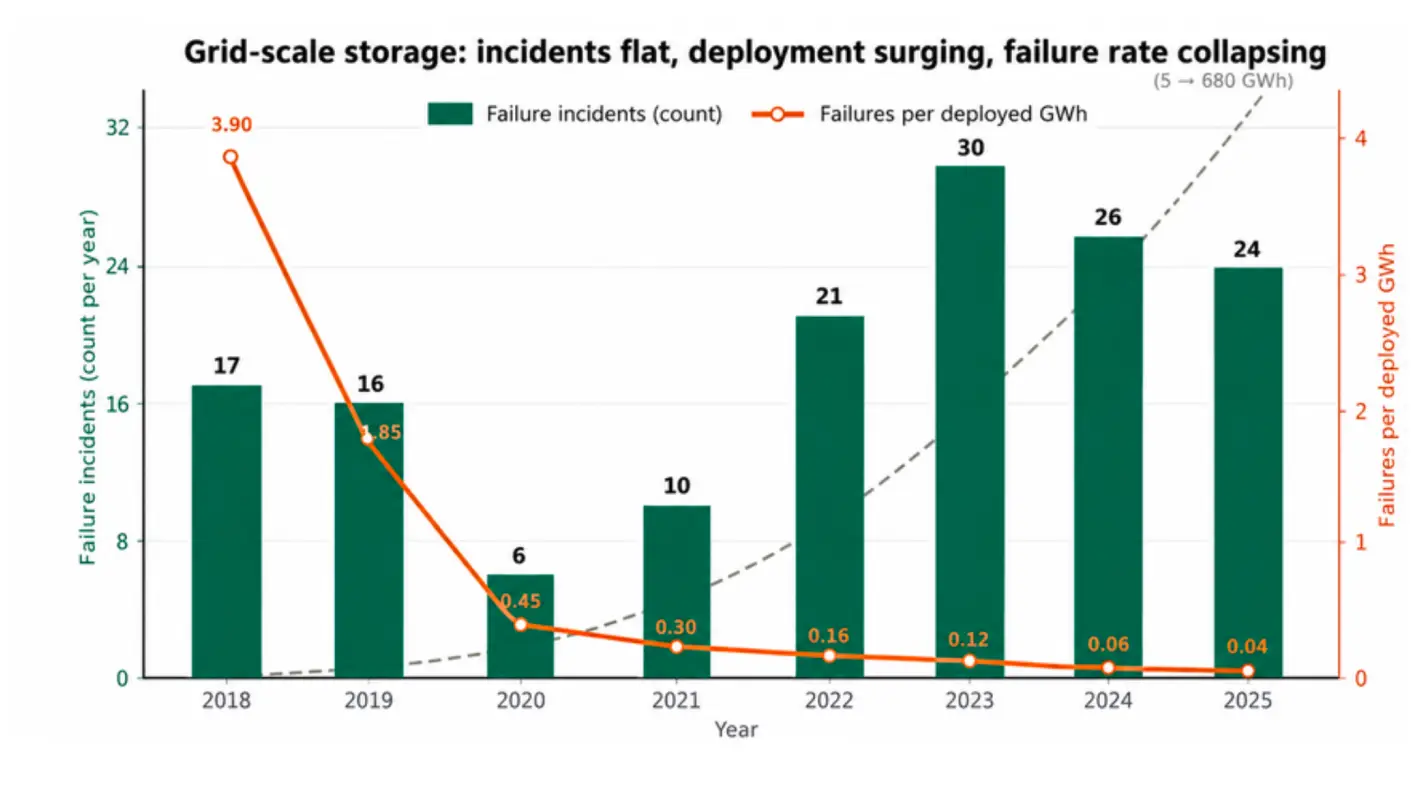
Recent data and trends now address local concerns. The technology is getting dramatically safer per unit installed, not riskier. Annual failure incidents have risen only modestly — from 17 in 2018 to24 in 2025 — while deployed capacity grew by orders of magnitude over the same period. On aper-unit basis, failures per deployed GWh have dropped by more than 95%.
Local communities can address their concerns about battery storage in their backyard by ensuring the authority having jurisdiction (AHJ) adopts regulations based on modern fire codes, and by requiring project owners to contact local fire authorities early in the development process.And whatever the AHJ ultimately requires, a reputable developer meets the code before anyone asks them to — because the chemistry, the enclosure design, the testing and the siting review are what protect the community, not the paperwork.