The Value of BESS in California
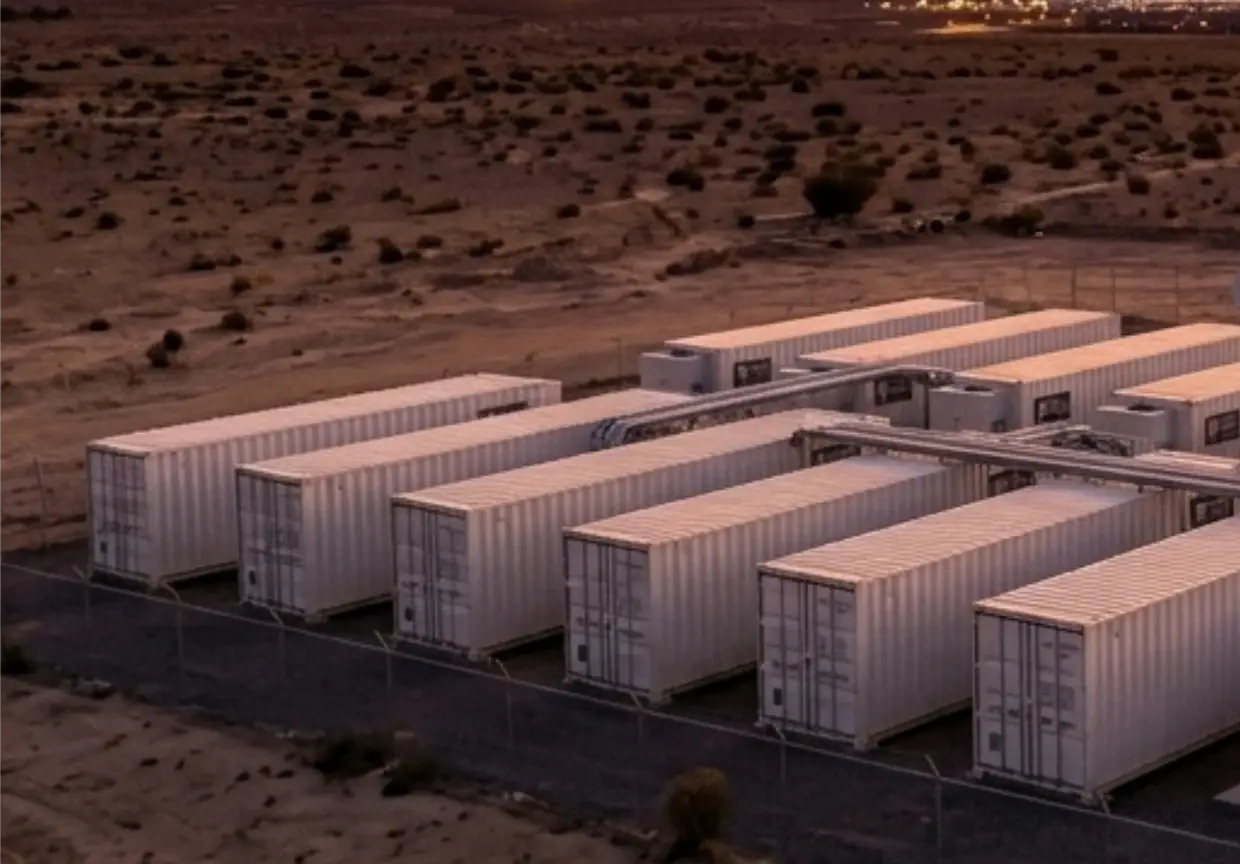
Commercial and industrial (C&I) electricity users in California are confronted with two big problems: electricity is expensive and difficult to obtain. What most don't know is that being able to avoid using energy during summer afternoons—when California's grid is at its most stressed—can resolve both of those issues. A single piece of hardware can help energy consumers avoid those times: Battery Energy Storage Systems (BESS).
The reason why power is expensive and delays for new service requests are long is that California's energy system—from generation to transmission to distribution—is at capacity. There's not enough electricity to give users all that they want, and there's not enough capacity on the wires to get the electricity to where it needs to be. Most electricity users in California know this, but they don't know that it's only sometimes true.
Why the grid’s worst hours set the price for everyone.
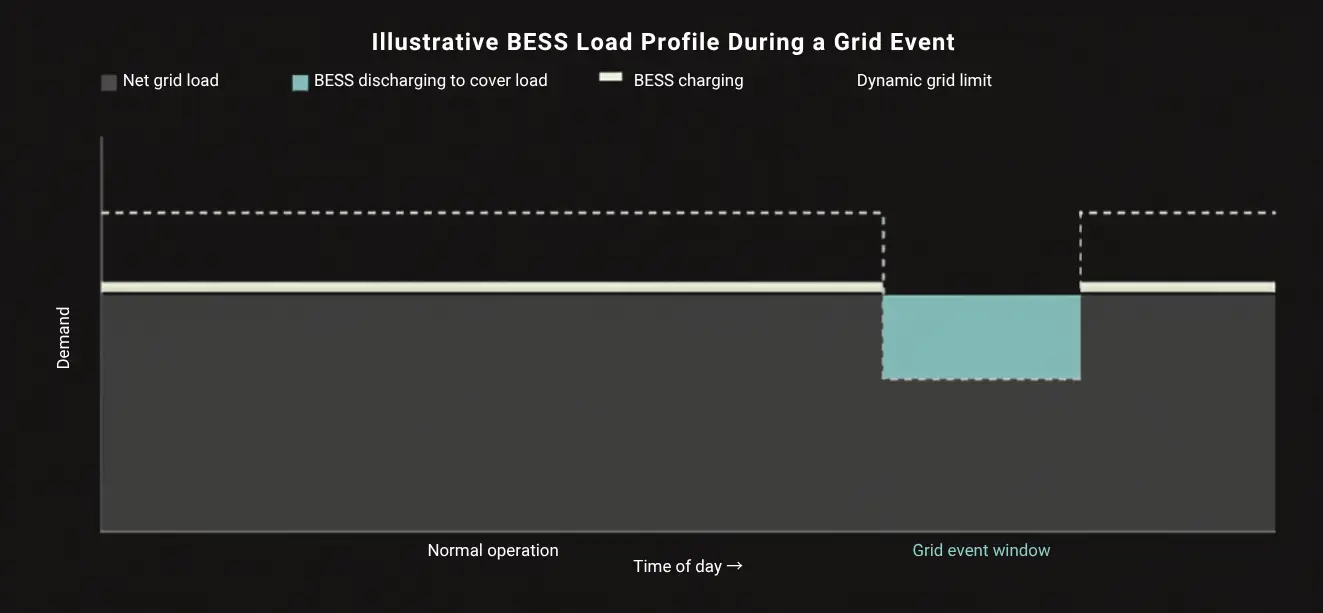
When C&I customers are told that the grid doesn't have capacity to provide new service, what that actually means is that the grid doesn’t have capacity in summer afternoons. The answer to getting power cheaper and faster is to not pull from the grid at those times and to participate in the programs that reward that behavior. The BESS systems that trucurrent deploys enable both by charging when grid conditions are not tight, and then running the facility on battery power when they are tight.
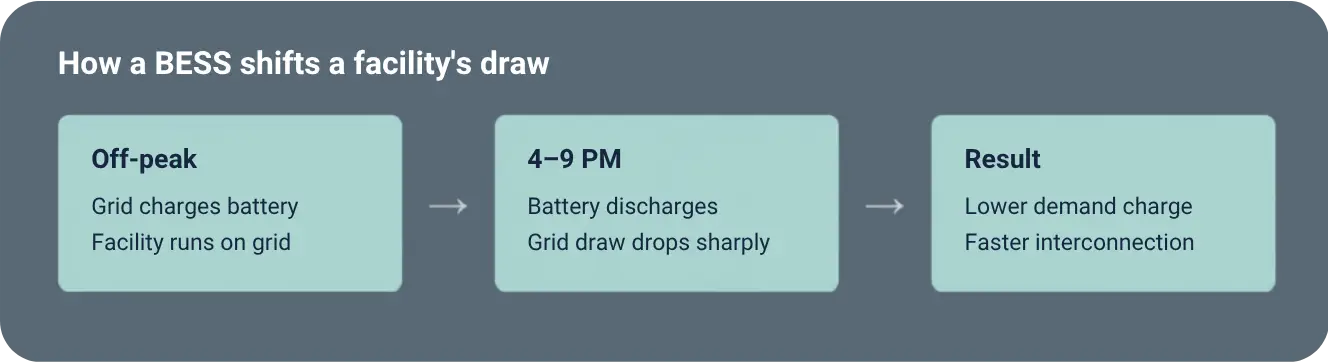
Two programs turn flexibility into savings.
Flexible interconnections and battery-only rate options are what make that possible. California utilities will offer C&I users accelerated access to power if they can commit to not pulling from the grid when power is scarcest and most expensive—PG&E's program is called Flex Connect. Additionally, with battery-only rate options, users can swap out high on-peak demand charges for high on-peak energy rates. Getting out of high demand charges is valuable because demand is evaluated based on a facility's single 15-minute window of highest power draw over the course of a month. Miss 15 minutes, pay full cost for the whole month. Swapping out that demand charge for high TOU rates means if you miss on 15 minutes, you just pay a higher price for those 15 minutes.
Miss 15 minutes, pay full cost for the whole month.
Stacking flexible interconnection with flexible rates.
Combining these two approaches can be powerful. PG&E's flexible interconnection offer typically requires the ability for sustained curtailment over 11 hours—but at varying levels and only infrequently. In the below table, PG&E shows that it may need the user to curtail during September afternoons. That would mean that instead of pulling from the grid, the user would pull from the battery. During the most restricted hour they would be required to curtail load to 56% of the 3.8 MW interconnection—the battery would have to give them 1.7 MW for that hour. But they would need sustained load reduction at various intervals for 9 hours. Doing so would take a total of about 7.5 MWh. So, a customer with a 1.75 MW/8 MWh battery could get more power quickly through Flex Connect, and they've won half the battle.
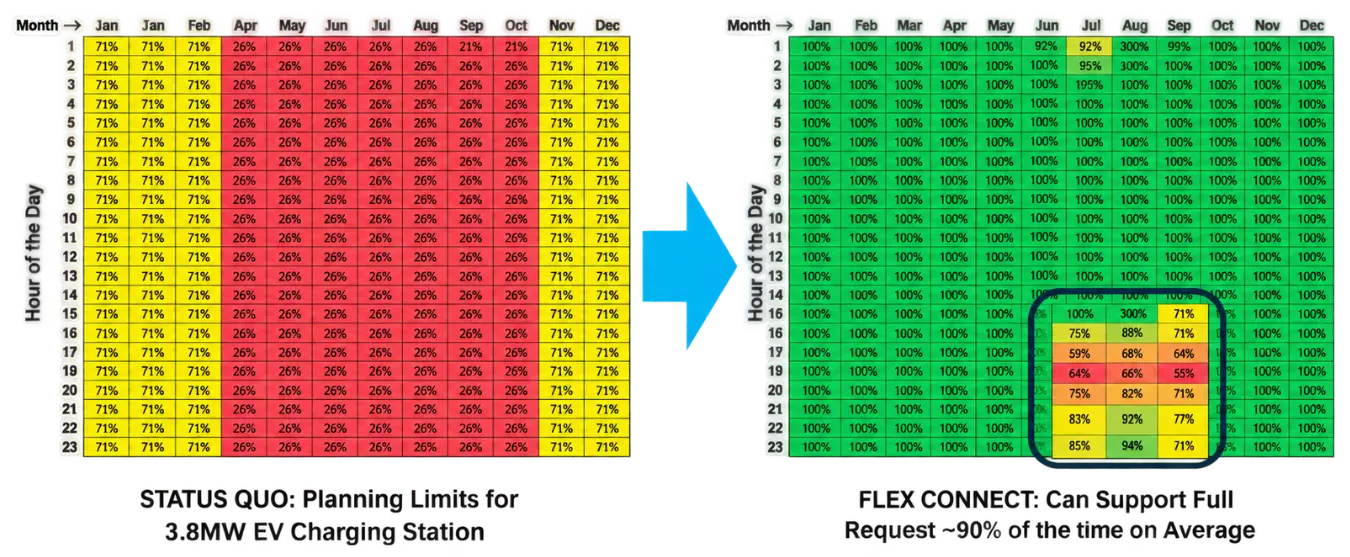
hours is exactly where a battery is designed to step in.
But what about cost? At 4 PM when peak pricing goes into effect, that customer is still pulling 3.2 MW from the grid. That single hour will cost them over $132,000, because it sets their peak demand charge. PG&E typically calls Flex Connect events infrequently—perhaps once per month—but the inability to manage demand on that one day is extraordinarily expensive. Switching to the BESS-only Option R resolves that. The on-peak demand charge drops by nearly 90% to less than $20,000 and this particular user would just pay $1,200 for the energy they used during that hour. And on every non-event day, they could use the battery to lower consumption during the critical 4–9 PM window and reduce their monthly bill. This customer, by combining flexible rate options with flexible interconnections, would have access to power in one year instead of five, and make their power cheaper for the next 20 years.
California's grid is constrained by its worst hours of the year. Load flexibility used to avoid grid draw during those hours enables the same grid to serve more customers. Utilities in California are rolling out programs to reward customers for avoiding those hours. Taking advantage of those programs leads to a better outcome for the grid and the customer's energy costs.
Cost Analysis Assumptions
- The customer has 3.8 MW of load needing to be met during the Flex Connect window.
- The customer is using the BESS to manage demand charges outside of FlexConnect calls but is unable to do so during the Flex Connect call. They draw as much power from the grid as is available during Flex Connect events.
- The customer is on PG&E’s B-20 rate with primary distribution service—leading to peak demand charges of about $41/kW.
- The customer under B-20 Option R pays $0.40/kWh on peak.
- This is not a full bill analysis or battery sizing optimization; it doesn’t model what energy or demand charge costs on non-event days would be.